Fake event ticket websites and how to spot the hidden traps
Fraudulent ticketing platforms often use legitimate payment processors to manufacture a false sense of security before stealing your money.
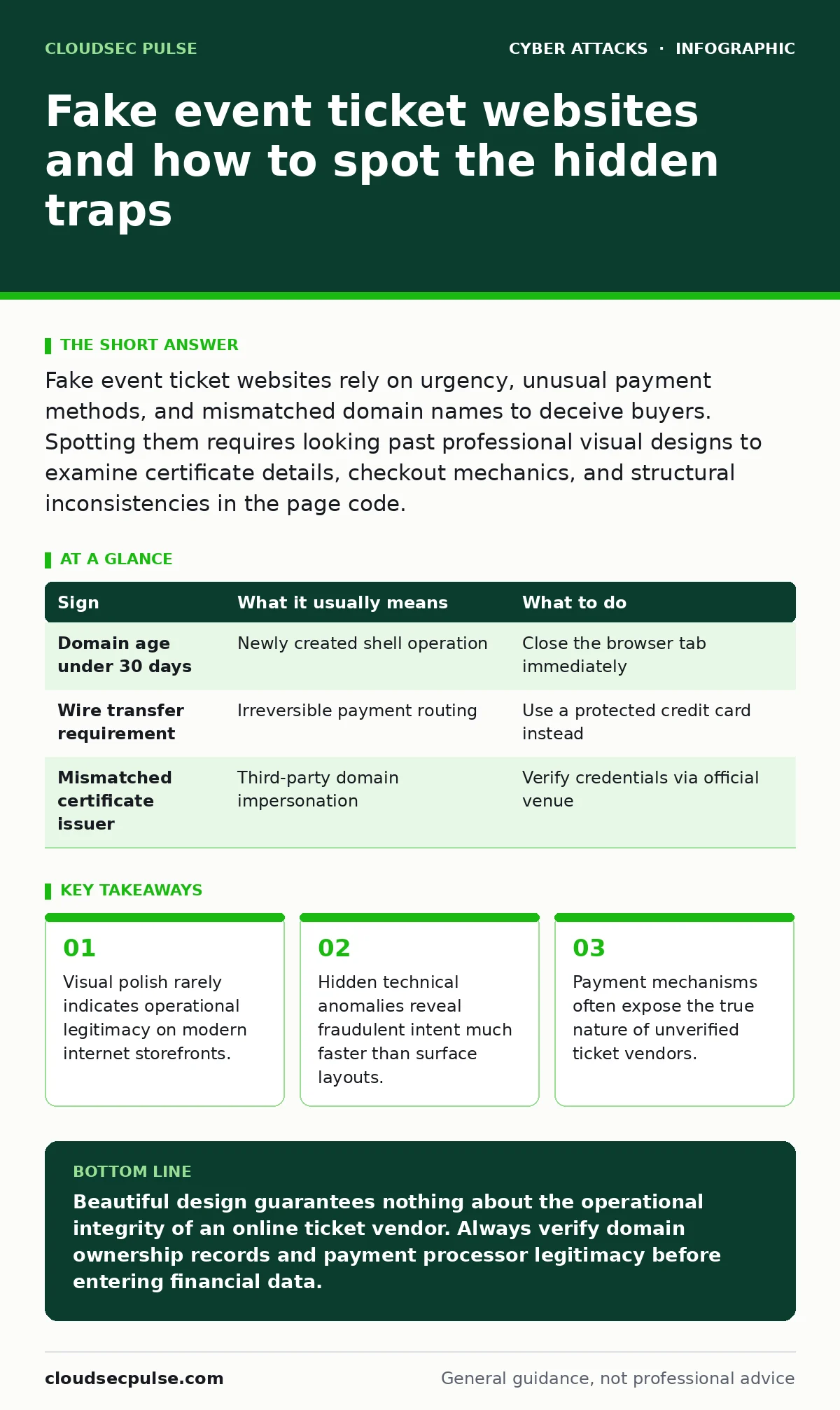
Fake event ticket websites rely on urgency, unusual payment methods, and mismatched domain names to deceive buyers. Spotting them requires looking past professional visual designs to examine certificate details, checkout mechanics, and structural inconsistencies in the page code.
What makes fake event ticket websites so convincing today?
Fraudulent ticketing platforms mimic real box offices by copying high-resolution seating charts, promotional banners, and official venue logos. Modern web design tools allow criminals to replicate the look and feel of major entertainment brands within hours. Professional aesthetics create an emotional shortcut in the human brain, bypassing the natural skepticism required when entering financial details on unfamiliar domains.
Visual polish masks underlying infrastructure flaws that automated security checks often miss. When you visit a fraudulent portal, you encounter familiar branding paired with unfamiliar backend mechanics. Recognizing this disconnect requires shifting your attention away from glossy promotional images and toward technical indicators of authenticity.
Which warning signs do most buyers notice first?
Initial suspicion usually arises from steep ticket discounts or extreme artificial urgency displayed across the screen. Countdown timers, pop-up notifications about competing buyers, and prices far below face value trigger immediate caution in experienced consumers. These high-pressure tactics aim to short-circuit analytical thinking before payment occurs.
Subtle spelling errors in the brand name or strange domain extensions also catch the eye of observant shoppers. Criminals register web addresses that look superficially correct at a glance but reveal glaring typos upon close inspection. Relying solely on these obvious visual clues leaves you exposed, because sophisticated operators now purchase convincing domains that pass casual glances.
What subtle technical indicators are easy to miss?
Deep technical discrepancies often hide behind polished front-end interfaces designed to resemble authorized ticket distributors. Security certificates issued to unrelated corporate entities or newly registered organizations signal immediate danger. Checking the issuance date of the cryptographic certificate reveals whether the domain belongs to an established business or a disposable shell operation.
Payment routing anomalies represent another critical detail that slips past distracted shoppers during high-demand sales events. Fraudulent platforms frequently reject standard credit card processing in favor of irreversible wire transfers or peer-related payment services. This preference eliminates your ability to dispute fraudulent charges later through standard banking protections.
How do you investigate a suspicious ticket seller?
Verifying an unfamiliar vendor demands systematic inspection of the underlying infrastructure rather than trusting customer review sections. Independent WHOIS domain registration records expose the exact creation date of the website in question. Brand-new domains claiming decades of industry experience point directly to fraudulent activity.
Cross-referencing the event lineup directly with the official performer or venue website confirms whether authorized primary partners list the vendor. Official primary box offices maintain strict contractual relationships with approved secondary marketplaces. Missing accreditation listings on the primary venue page indicate an unauthorized operation.
What is the anatomy of a deceptive checkout flow?
Fraudulent checkout pages often strip away standard consumer protections by disabling multi-factor authentication prompts during transaction finalization. Input fields might lack standard data validation scripts, accepting obviously incorrect card numbers or expiration dates without error. These structural shortcuts reveal hastily constructed codebases optimized solely for rapid harvesting of financial credentials.
See also: Server-Side Template Injection Prevention Checklist for Secure Code · Output Encoding Checklist: Prevent Injection and Display Errors
How should you respond when encountering a fraudulent site?
Encountering a deceptive portal requires immediate abandonment of the browsing session and reporting the domain to web hosting providers. Documenting the URL and sharing the findings through internal corporate security channels helps protect colleagues, especially if the scam intersects with broader phishing campaigns targeting organizational networks. Preserving evidence aids authorities in tracking systemic digital fraud operations across international borders.
Maintaining strict defensive postures across all digital interactions requires ongoing vigilance similar to conducting regular tabletop exercises for operational security teams. Establishing clear purchasing protocols prevents employees from bypassing organizational controls during high-profile entertainment ticket sales.
| Sign | What it usually means | What to do |
|---|---|---|
| Domain age under 30 days | Newly created shell operation | Close the browser tab immediately |
| Wire transfer requirement | Irreversible payment routing | Use a protected credit card instead |
| Mismatched certificate issuer | Third-party domain impersonation | Verify credentials via official venue |
Key takeaways
- Visual polish rarely indicates operational legitimacy on modern internet storefronts.
- Hidden technical anomalies reveal fraudulent intent much faster than surface layouts.
- Payment mechanisms often expose the true nature of unverified ticket vendors.
Beautiful design guarantees nothing about the operational integrity of an online ticket vendor. Always verify domain ownership records and payment processor legitimacy before entering financial data.
Frequently asked questions
Can browser safety warnings catch all fake ticket websites?
Built-in browser filters only block domains that have already been reported and cataloged as malicious. Brand-new fraudulent domains often operate for days or weeks before automated security lists update.
Why do fake ticket sites accept credit cards sometimes?
Criminals use stolen credit card processing accounts or high-risk merchant aggregators to temporarily accept standard plastic before payment networks shut them down.
Are resale marketplaces safer than direct event websites?
Authorized secondary ticket exchanges offer buyer guarantees and verified ticket transfers, whereas unverified independent platforms offer no recourse if tickets prove invalid at the gate.
How can I check when a domain was registered?
Public domain registration lookup tools display the creation date and administrative contact details for any web address on the internet.
How this guide was produced: written by the CloudSec Pulse editorial team with AI assistance, checked against the public references listed below, and reviewed when the facts change. See our editorial policy or report an error.