Tactical Threat Intelligence: Practical Indicators for Small Business Defense
Tactical indicators transform raw data into specific blocking rules that stop known malware before it executes on your endpoints.
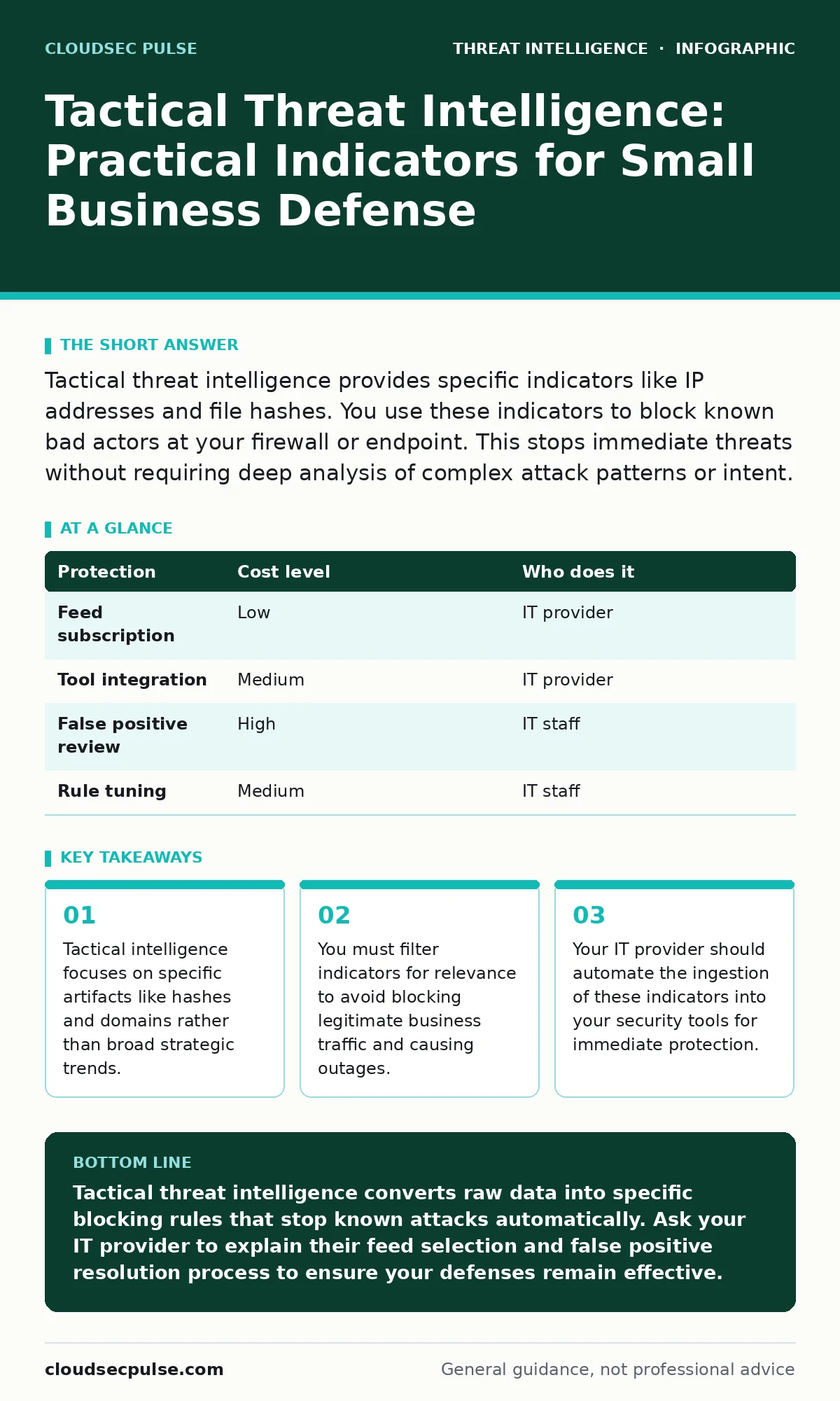
Tactical threat intelligence provides specific indicators like IP addresses and file hashes. You use these indicators to block known bad actors at your firewall or endpoint. This stops immediate threats without requiring deep analysis of complex attack patterns or intent.
What Tactical Threat Intelligence Actually Is
Tactical threat intelligence consists of specific, machine-readable indicators of compromise. These indicators include file hashes, IP addresses, domain names, and URL paths. They tell you exactly what to look for in your logs and network traffic. This differs from strategic intelligence, which describes long-term trends, or operational intelligence, which details an attacker’s methods. Tactical data answers the question of what a threat looks like right now.
You use this data to update your security controls. When a security vendor identifies a new variant of malware, they publish its digital fingerprint. Your firewall or endpoint detection system can then search for that fingerprint. If it finds a match, it blocks the activity. This process happens in seconds or minutes, rather than days. It turns passive monitoring into active prevention for known threats.
Why Small Teams Benefit Most From Indicators
Small organizations often lack the staff to analyze raw network logs. You cannot hire a full-time analyst to watch for subtle anomalies. Tactical intelligence bridges this gap by providing pre-analyzed answers. You do not need to understand the code behind a virus. You only need to know that a specific file hash is dangerous. This allows a small IT team to defend against sophisticated attacks.
The scale of your network makes this approach efficient. Large enterprises have diverse environments that generate noise. Small businesses usually have a standardized setup. A single indicator often applies to every device in your office. This uniformity means one update protects your entire infrastructure. You get enterprise-grade blocking with minimal configuration effort. This efficiency is the primary reason tactical intelligence matters at your scale.
How To Use Indicators In Your Daily Operations
Integration is the key to using tactical intelligence effectively. You cannot manually check every indicator against your logs. Your security tools must ingest these feeds automatically. Most modern firewalls and endpoint protection platforms support standard formats. These tools pull new indicators from trusted sources and update their block lists. This automation ensures you are protected against the latest threats without manual intervention.
You must verify that your tools apply these rules correctly. Test the integration by using a known safe test file or a simulated indicator. Ensure the system blocks the test item without blocking legitimate business applications. This validation step prevents accidental outages. It also confirms that your security team receives alerts when a block occurs. Proper testing ensures the defense mechanism works as intended.
The Hidden Cost Of Blocking Too Much
False positives in threat detection occur when your system blocks legitimate traffic. This happens when an indicator is too broad. For example, blocking an entire IP range might stop a malicious server but also block a cloud provider you use. This causes business disruption. You must balance security with availability. Overly aggressive blocking can halt email or web access.
You need a process for reviewing blocked items. When an alert triggers, determine if it is a true threat or an error. If it is an error, you must adjust your rules. This requires human judgment. Even with automation, you must monitor the impact of your block lists. Regular reviews prevent the accumulation of outdated or incorrect indicators. This maintenance keeps your defenses sharp and reliable.
What To Ask Your IT Provider
Your IT provider is responsible for managing these threat feeds. You must ensure they are using reputable sources. Ask them to explain how they select their intelligence providers. Not all feeds are equal. Some focus on specific industries, while others cover general threats. Your provider should choose feeds relevant to your business sector. This relevance reduces noise and improves accuracy.
Ask about their process for handling false positives. You need a clear path for reporting issues. If a legitimate site is blocked, how quickly can it be restored? Your provider should have a documented procedure for this. This ensures minimal downtime during corrections. You also need to know how they update their tools. Frequent updates ensure you have the latest protections.
| Protection | Cost level | Who does it |
|---|---|---|
| Feed subscription | Low | IT provider |
| Tool integration | Medium | IT provider |
| False positive review | High | IT staff |
| Rule tuning | Medium | IT staff |
- Which threat intelligence feeds do you subscribe to?
- How do you filter indicators for relevance to our industry?
- What is your process for resolving false positive blocks?
- How often do you update your security tools with new indicators?
See also: What Is the Difference Between STIX and TAXII? A Structural Breakdown · Hacktivism Explained: Defining Motives, Methods, and Mitigation
Integrating With Broader Security Practices
Tactical intelligence works best when combined with other security measures. It provides the specific data points for detection. Your broader strategy provides the context. For example, user and entity behavior analytics can spot unusual login patterns. Tactical intelligence can then block the specific IP addresses used in those logins. This combination strengthens your overall defense.
You should also consider digital forensics and incident response plans. When a breach occurs, tactical indicators help you find the extent of the damage. You can search for the specific file hashes associated with the attack. This speeds up the cleanup process. It also helps you understand how the attacker moved through your network. This information improves your future defenses.
Maintaining Long-Term Effectiveness
Threat indicators have a short lifespan. A malicious IP address may be reused by a legitimate service. A file hash changes when the attacker modifies the code. You must regularly review and update your block lists. Outdated indicators clutter your system and increase the risk of false positives. Cleaning up old data keeps your tools efficient.
You should also monitor the performance of your feeds. Track how many alerts each feed generates. Compare this to the number of true threats identified. If a feed generates many alerts but few blocks, it may not be useful. Your IT provider should evaluate feed quality periodically. This ensures you get value from your investments. Continuous improvement keeps your defenses effective over time.
Key takeaways
- Tactical intelligence focuses on specific artifacts like hashes and domains rather than broad strategic trends.
- You must filter indicators for relevance to avoid blocking legitimate business traffic and causing outages.
- Your IT provider should automate the ingestion of these indicators into your security tools for immediate protection.
Tactical threat intelligence converts raw data into specific blocking rules that stop known attacks automatically. Ask your IT provider to explain their feed selection and false positive resolution process to ensure your defenses remain effective.
Frequently asked questions
How often do threat intelligence indicators expire?
Indicators can expire in days or weeks. Attackers frequently change their infrastructure and code. You must regularly update your block lists to remove outdated entries and add new threats.
Can tactical intelligence stop zero-day attacks?
No. Tactical intelligence relies on known indicators. Zero-day attacks are new and have no known signatures yet. You need behavioral analysis and strict access controls to mitigate these unknown threats.
Is free threat intelligence safe to use?
Free feeds can be useful but may lack validation. They might contain outdated or incorrect indicators. Always verify the source and test indicators before applying them to your production environment.
How does this differ from YARA rules?
YARA rules describe the structure of a file, not just its hash. They can detect variants of a malware family even if the hash changes. Tactical intelligence usually focuses on exact matches like hashes and IPs.
How this guide was produced: written by the CloudSec Pulse editorial team with AI assistance, checked against the public references listed below, and reviewed when the facts change. See our editorial policy or report an error.